Supabase public evaluation flow — Hovvi
How Supabase lets a founder move from a Postgres platform promise through the integrated module map, one product's proof and published usage quotas to an explicit account boundary.
Published by Hovvi Research. Observed ; materially updated .
What happened
Lead with the database engine promise, let visitors map the integrated modules, prove one product concretely, then compare usage quotas before the account gate. Let a founder move from a platform promise through an integrated module map, one product's concrete proof and published usage quotas to an explicit account boundary.
Evidence
Observed facts
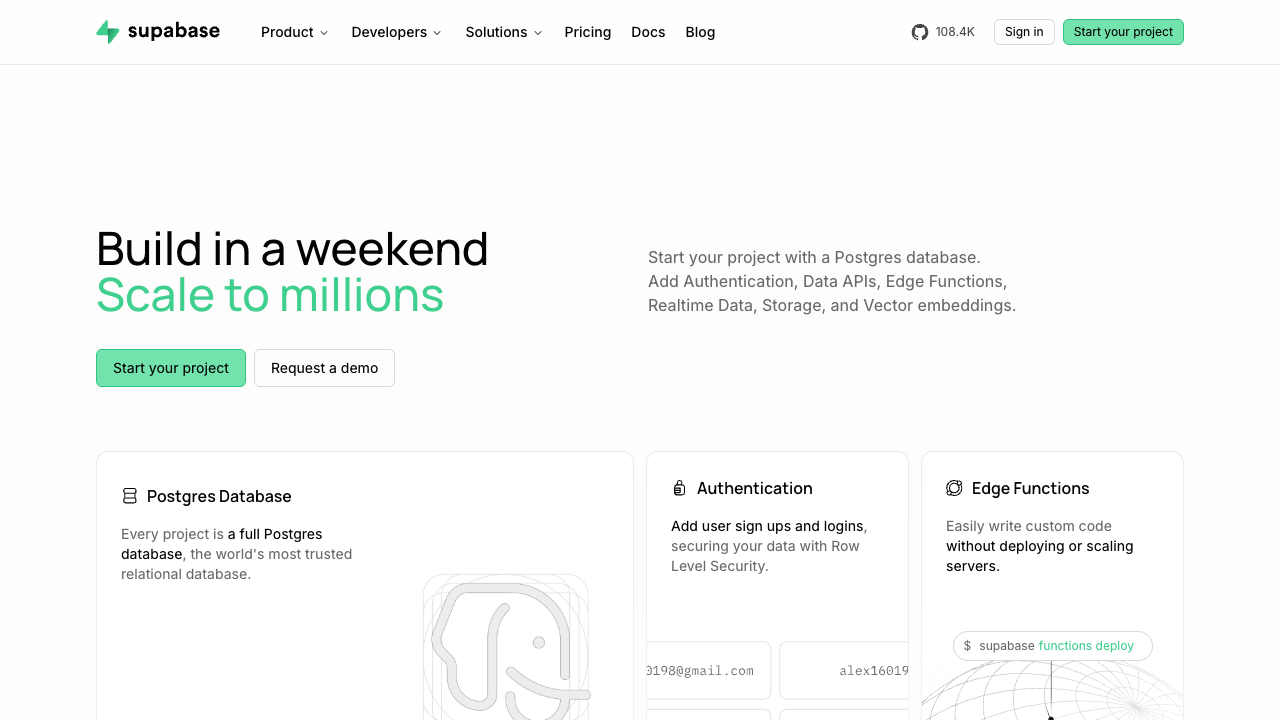
- The English homepage leads with Build in a weekend, scale to millions and pairs a green Start your project action with a Request a demo path.
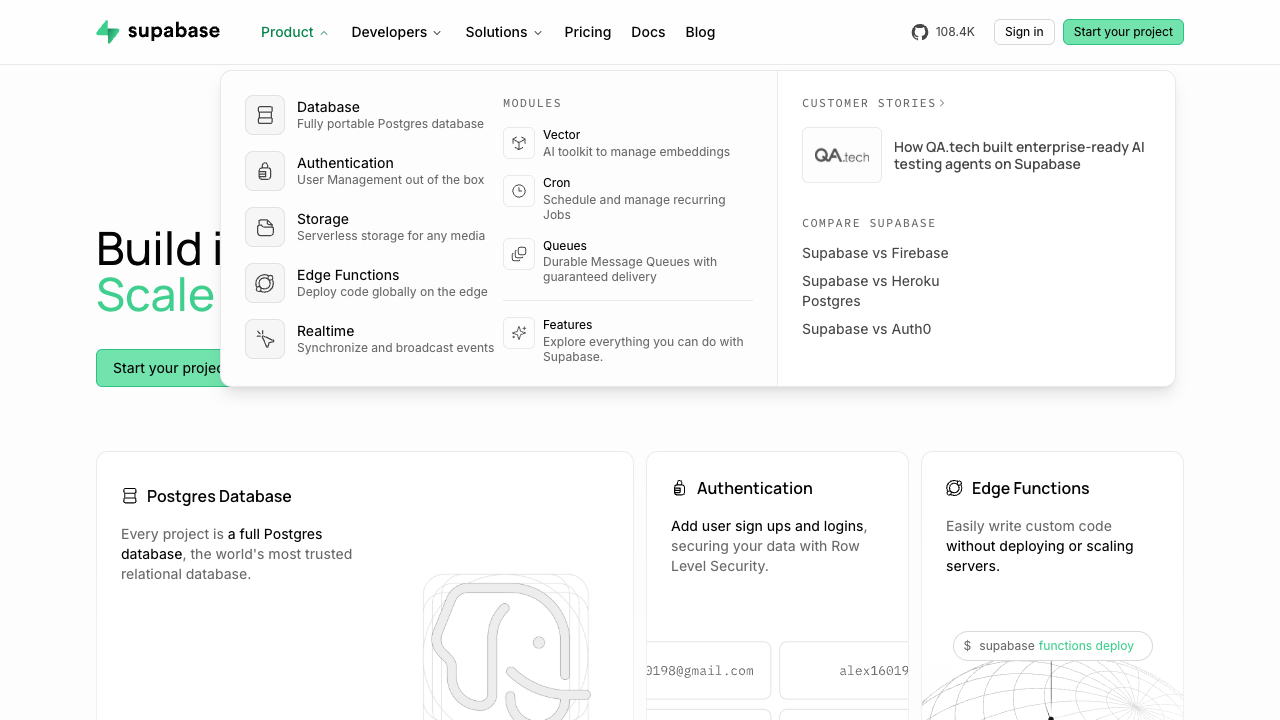
- The Product menu presents Database, Auth, Storage, Edge Functions and Realtime as integrated modules, adds Vector, Cron and Queues extensions and links comparisons against Firebase, Heroku Postgres and Auth0.
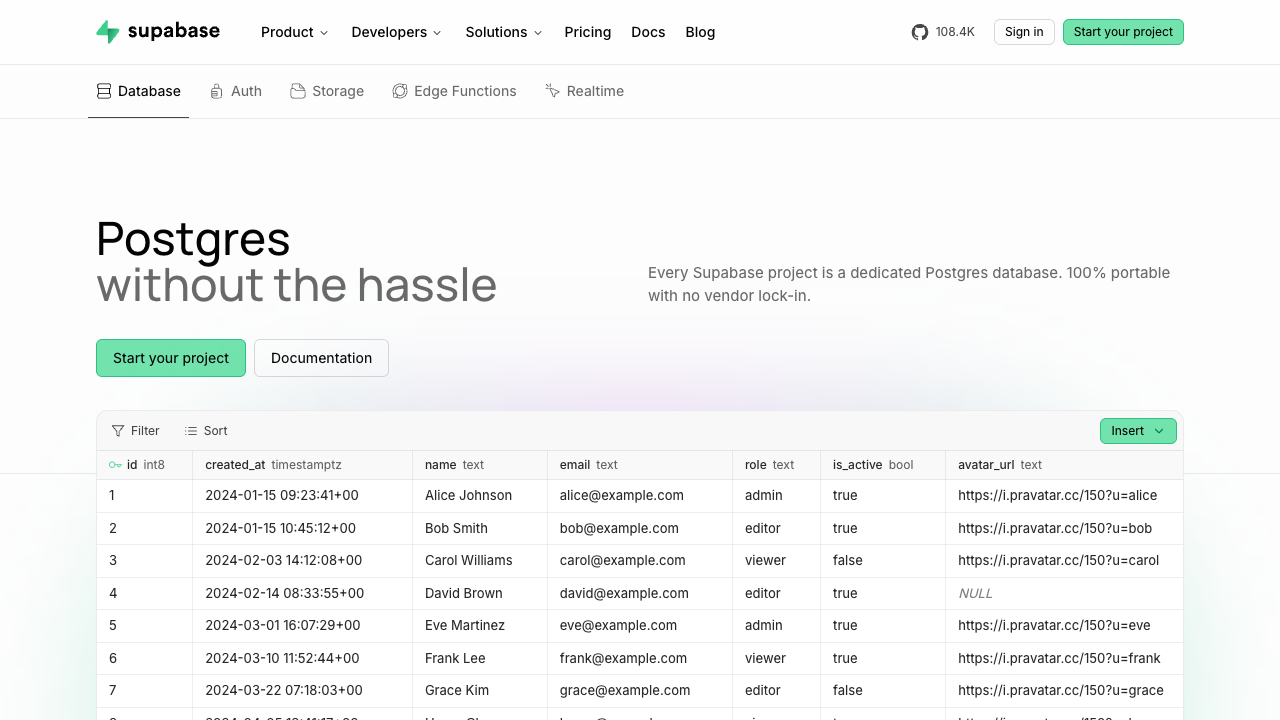
- The Database page opens on Postgres without the hassle and proves it with spreadsheet-style table editing, table creation and row-level security policy examples.
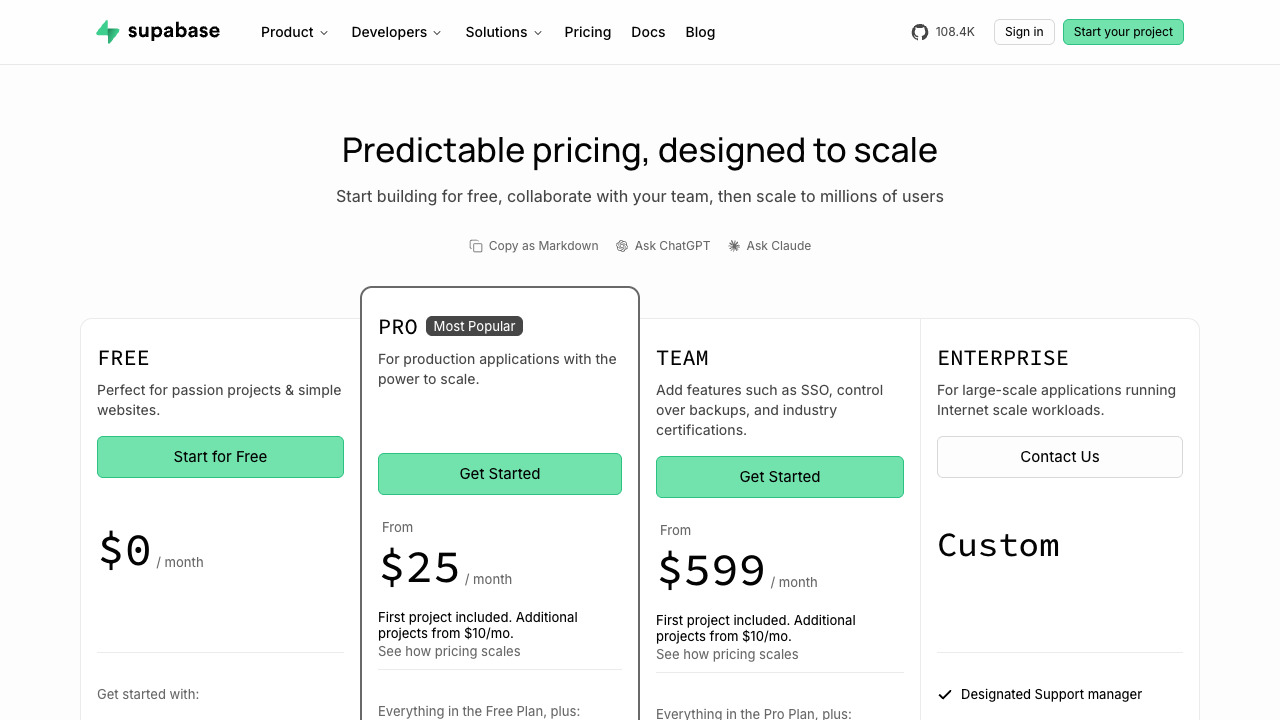
- The pricing page titled Predictable pricing, designed to scale separates a Free plan of 50,000 monthly active users, 500 MB database and 1 GB file storage from a Pro plan from $25 per month with published per-unit rates.
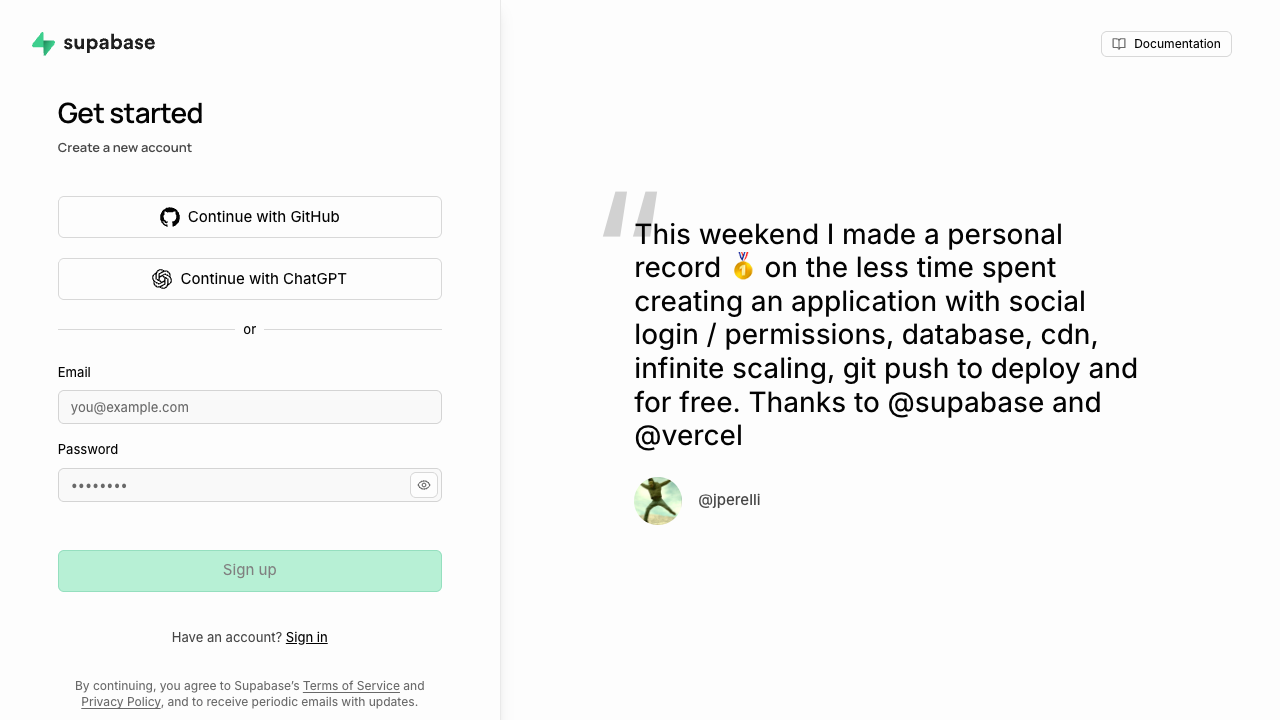
- The sign-up boundary offers Continue with GitHub, Continue with ChatGPT and email account creation before any project exists.
Editorial inference
- Staging the promise, module map, product proof and quotas before the gate reduces evaluation ambiguity; Hovvi should keep case evidence browsable before any account exists.
Product flow
- Platform promise
- Integrated module menu
- Database product proof
- Plan comparison
- Account boundary
Founder takeaway
Prove the engine and its modules in public, publish the quotas, and ask for identity only when a project begins.
Use when
- A platform bundles several infrastructure modules under one brand
- Prospects compare usage quotas before creating an account
Avoid when
- The product portfolio is too small to need a module map
- Public pages cannot represent the post-sign-up product
Next implementation step
Design a public evaluation journey that moves from a platform promise to an integrated module map, one product's proof, usage quotas and an explicit account boundary.
Acceptance criteria
- Every evaluation stage resolves to a rights-qualified observed screen
- A visitor can move from the platform promise to the Database proof and pricing without creating an account
- Usage quotas and marginal rates are visible before the account boundary
- The account boundary names its identity methods before any data entry
- Authenticated continuation is explicitly excluded until observed
Related cases
- Evaluate, then activate: Supabase project activation flow — Hovvi
The public evaluation path explains the Postgres promise, integrated modules and usage quotas before the activation flow shows the account gate, inline validation and recovery at first commitment.
- Same evaluation arc, different proof: Cloudflare Workers public product evaluation flow — Hovvi
Both brands move anonymous visitors from a platform promise through product discovery and plan comparison to an explicit account boundary; Supabase proves an integrated Postgres backend while Cloudflare proves a runnable edge sandbox.
Version history
Current snapshot: snap_supabase_public_evaluation_2026_08_25 — Added the first complete Supabase flow: anonymous evaluation from the Postgres promise through the integrated module map, one product's proof, published usage quotas and the account boundary.
Use with an Agent
Example read-only MCP query:
Retrieve the Hovvi Founder case fc_supabase_public_evaluation_2026_08 with observed facts, evidence screens, applicability limits and citations.