Cloudflare Workers public product evaluation flow — Hovvi
How Cloudflare lets a prospective builder move from a platform promise through product discovery and plan comparison to an explicit account boundary.
Published by Hovvi Research. Observed ; materially updated .
What happened
Move from a portfolio-level promise to a category, a specific product, its commitment model and an explicit account boundary. Let a prospective builder move from a broad promise to a named product, compare commitment and understand when identity becomes required.
Evidence
Observed facts
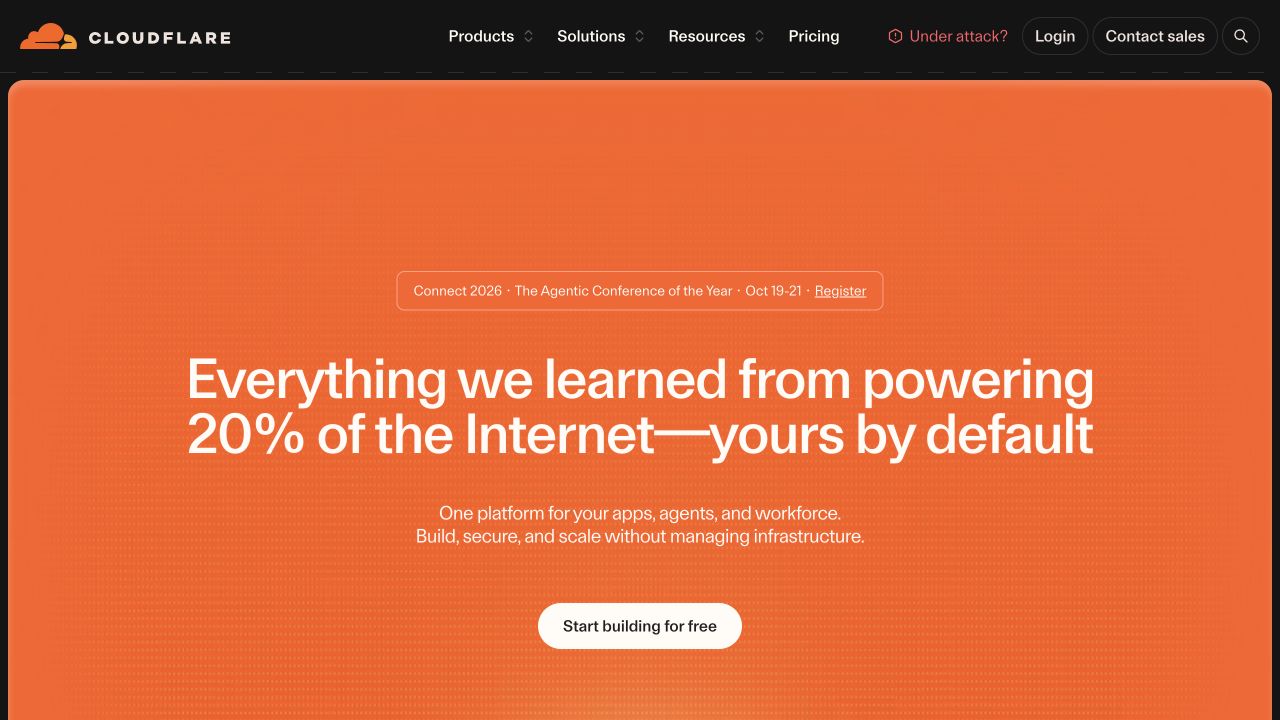
- Cloudflare's homepage presents one platform promise for apps, agents and workforce and pairs it with a Start building for free action.
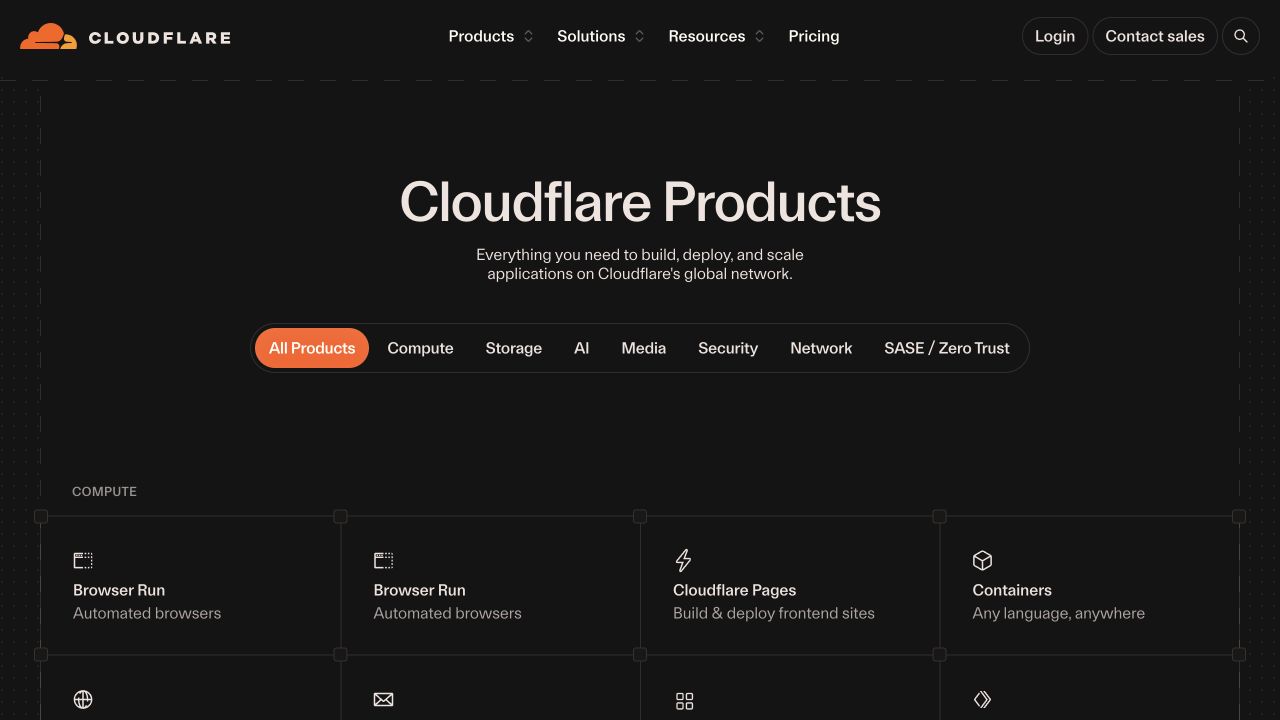
- The public Products page organizes the portfolio into Compute, Storage, AI, Media, Security, Network and SASE / Zero Trust categories.
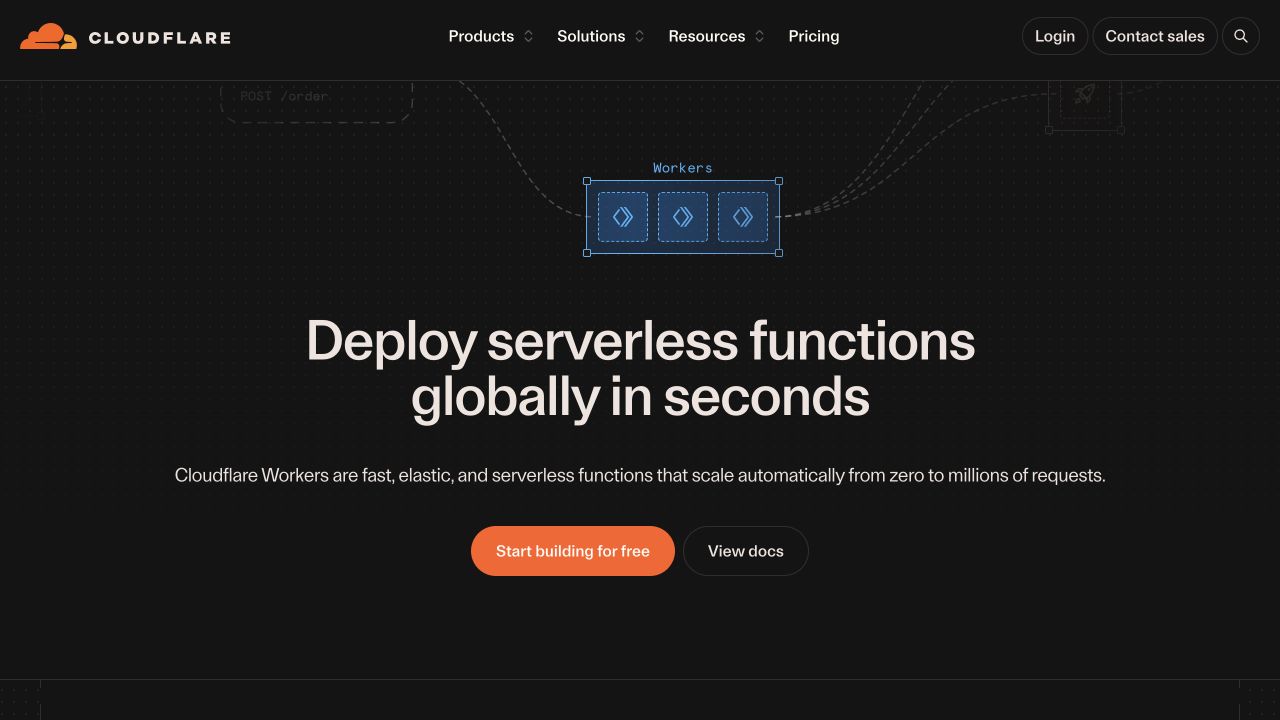
- The Workers product page separates a Start building for free action from a View docs action before account creation.
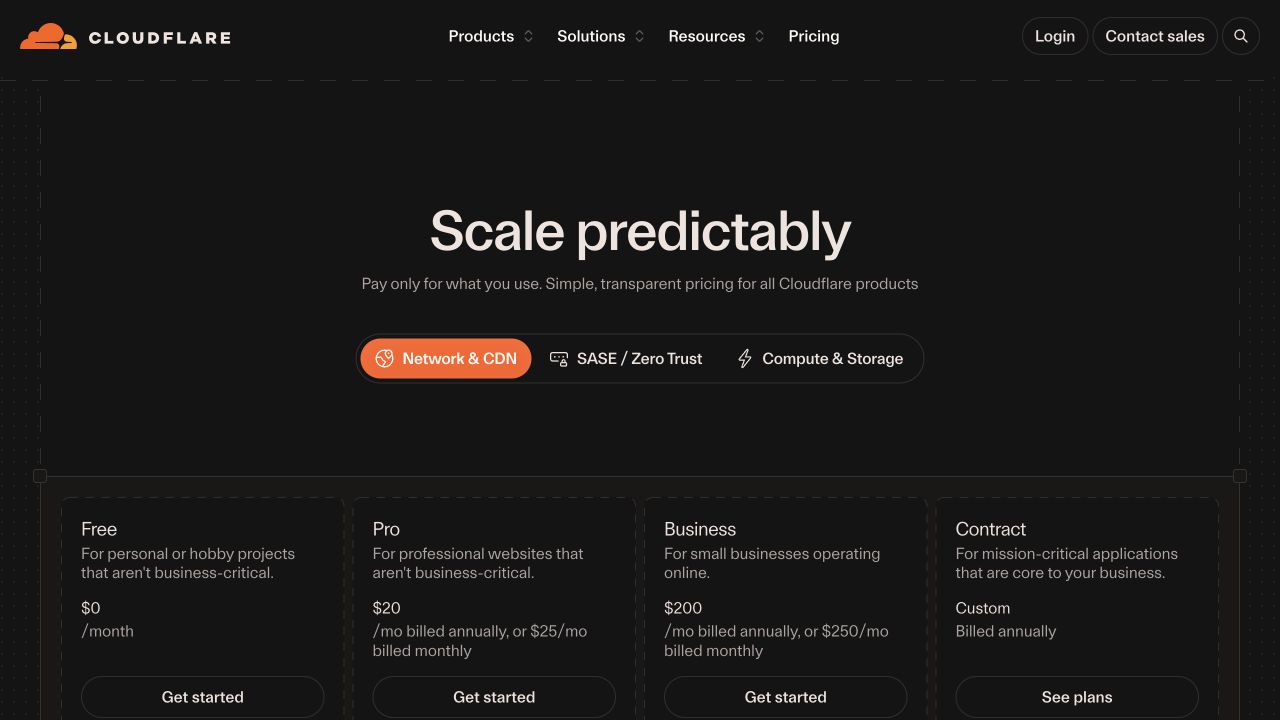
- The public Plans page separates Network and CDN, SASE / Zero Trust, and Compute and Storage before showing plan choices and Get started actions.
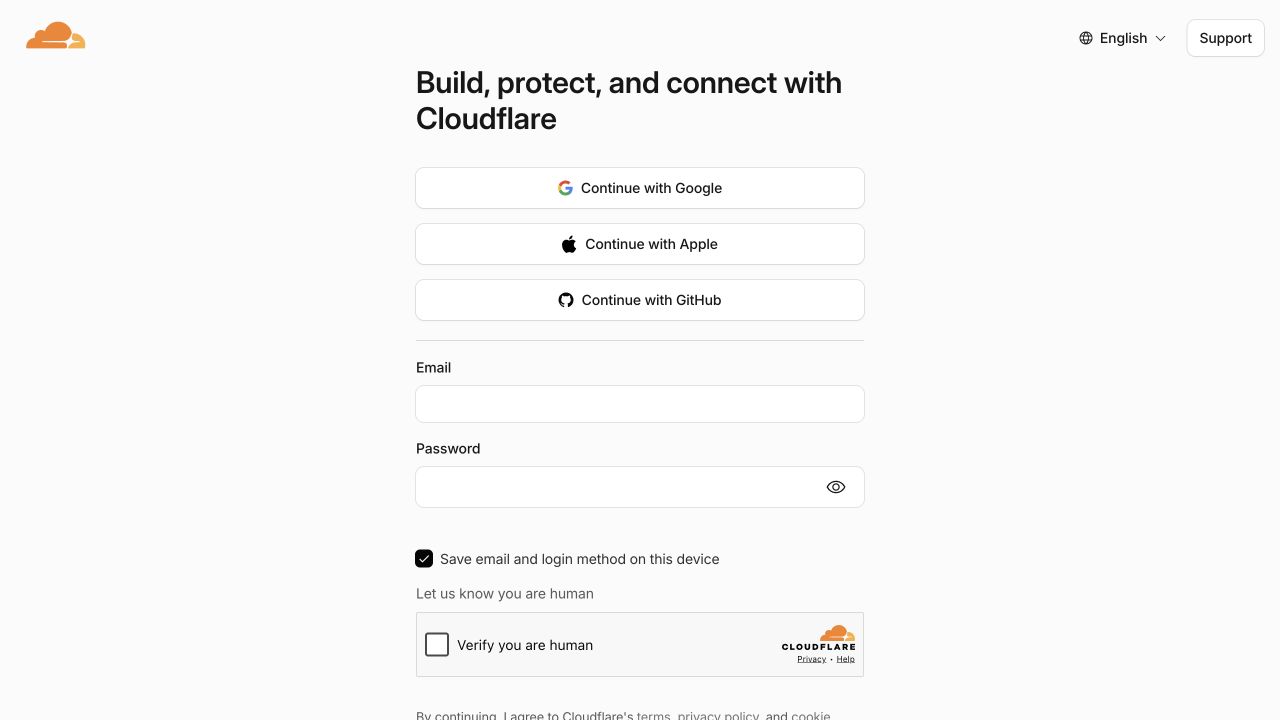
- The observed account-creation boundary offers Google, Apple, GitHub and email methods and requires human verification before continuation.
Editorial inference
- A multi-product company can reduce evaluation ambiguity by revealing product architecture and commitment in stages rather than asking for identity at the first brand promise.
Product flow
- Platform promise
- Product directory
- Product entry
- Plan comparison
- Account boundary
Founder takeaway
Reveal architecture and commitment progressively; ask for identity after the user understands the product and its model.
Use when
- A company sells several products under one platform brand
- Prospects need to compare value and commitment before creating an account
Avoid when
- The product portfolio is small enough that categories add unnecessary navigation
- The public pages cannot accurately represent the post-sign-up product
Next implementation step
Design a public evaluation journey that moves from a broad platform promise to product selection, commitment comparison and an explicit account boundary.
Acceptance criteria
- Every evaluation stage resolves to a rights-qualified observed screen
- A visitor can move from the platform promise to a named product without creating an account
- Pricing or commitment is visible before the account boundary
- The account boundary shows available identity methods and verification
- Authenticated continuation is explicitly excluded until observed
Related cases
- Same evaluation arc, different proof: OpenAI API Platform public evaluation journey — Hovvi
Both public flows move from a broad product promise through product and commitment evidence to an explicit identity boundary; OpenAI uses model and agent evidence while Cloudflare uses product and plan evidence.
- Evaluate, then activate: Cloudflare Workers Playground first-run flow — Hovvi
The public evaluation path explains the platform, product and commitment before the Playground path proves first value and recovery.
- Portfolio pricing to product meter: Cloudflare Workers pricing: free quota, overage and CPU limits — Hovvi
The evaluation path shows the portfolio-level plan architecture while the meter case explains the Workers-specific allowance, overage and cost guardrail.
- Same evaluation arc, different proof: Polymarket public evaluation flow — Hovvi
Both brands let anonymous visitors move from promise to product proof to an explicit account boundary; Polymarket proves value with live prices while Cloudflare proves it with a runnable sandbox.
- Same evaluation arc, different proof: Supabase public evaluation flow — Hovvi
Both brands move anonymous visitors from a platform promise through product discovery and plan comparison to an explicit account boundary; Supabase proves an integrated Postgres backend while Cloudflare proves a runnable edge sandbox.
Version history
Current snapshot: snap_cloudflare_workers_public_evaluation_2026_08_25 — Added a second complete Cloudflare Flow for public product evaluation, complementing the Playground activation Flow without claiming authenticated dashboard states.
Use with an Agent
Example read-only MCP query:
Retrieve the Hovvi Founder case fc_cloudflare_workers_public_evaluation_2026_08 with observed facts, evidence screens, applicability limits and citations.